Why Successful Mediation Feels Easy—When It’s Done Right
Most people come to mediation after they’ve tried everything else.
They’ve had the hard conversations.
They’ve exchanged emails that went nowhere.
They’ve involved advisors, attorneys, or family members—and still feel stuck.
When mediation works well, it feels almost deceptively simple. Calm. Productive. Forward-moving.
That ease is not accidental.
It’s the result of a disciplined, psychology-informed process designed to reduce resistance, build trust, and guide people toward decisions they are willing to stand behind.
Mediation Is Not About Control—It’s About Process
One of the biggest misconceptions about mediation is that the mediator “drives” the outcome.
In reality, effective mediation is about controlling the process—not the people.
At KSC, we approach mediation as a structured, facilitated negotiation where:
The parties retain full control over decisions
The mediator maintains strict neutrality
The process is intentionally designed to reduce defensiveness and escalation
This distinction matters. People don’t resist resolution—they resist feeling pushed, judged, or cornered. A well-executed mediation process removes those barriers before they surface.
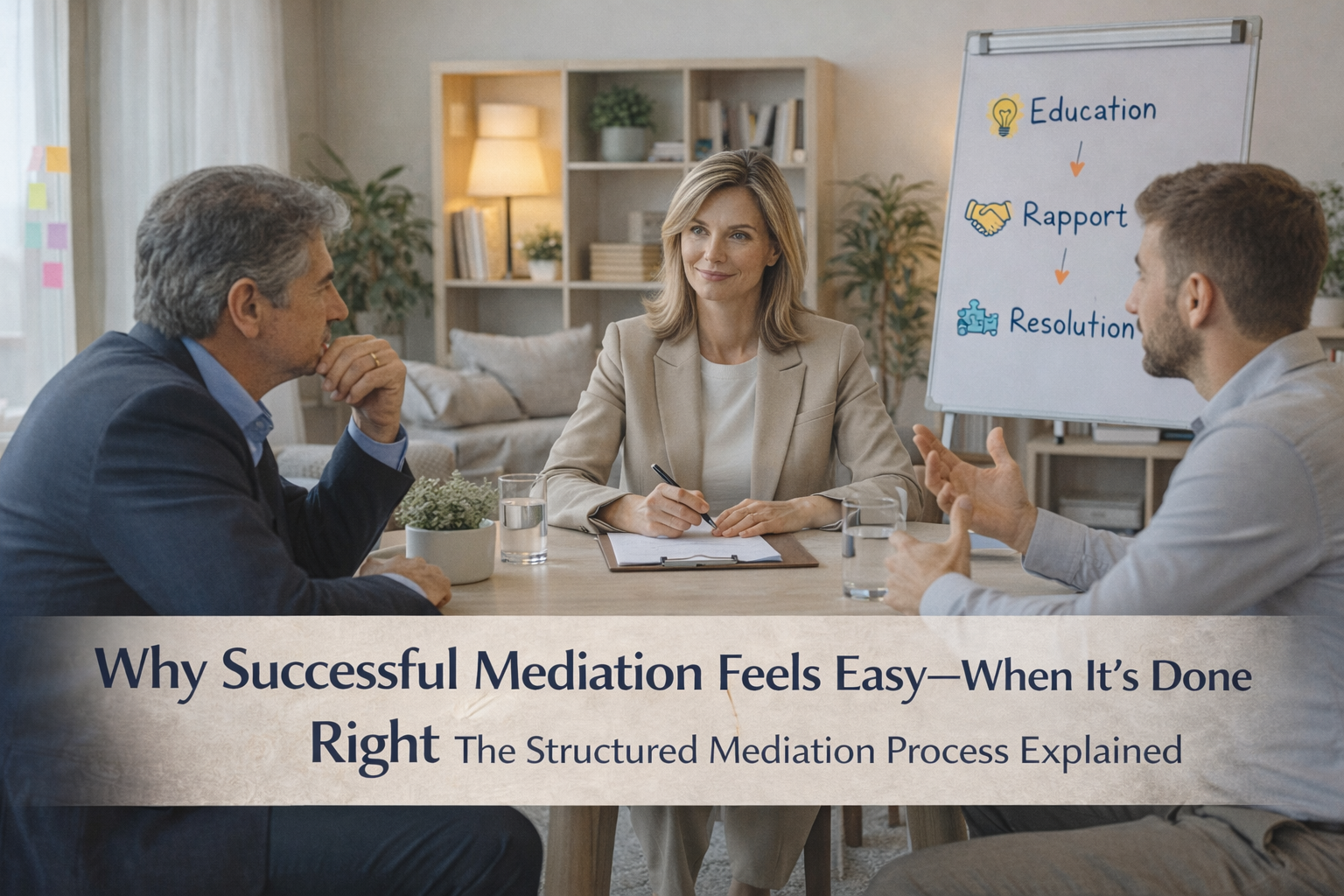
Certified mediation experts guiding a confidential dispute resolution process
The Hidden Power of the Convening Stage
Most people think mediation begins when everyone sits down at the table.
In practice, it begins much earlier.
The convening stage—the period before formal mediation—often determines whether resolution is even possible. This stage is where credibility is established, expectations are set, and trust begins to form. According to professional mediation standards, convening includes educating participants, qualifying the matter, preparing parties for resolution, and building rapport before substantive issues are addressed Reading Assignment Lesson 3.
When convening is rushed or mishandled, parties arrive defensive, misinformed, or distrustful. When it’s done well, they arrive prepared to engage.
Education Lowers Resistance
Most clients are familiar with adversarial systems—litigation, arbitration, formal hearings. Mediation can feel unfamiliar, which often creates hesitation.
That’s why education is central to successful mediation.
Clients need to understand:
Mediation is voluntary and confidential
There are no rigid rules of evidence
Creativity and flexibility are encouraged
Agreements are more likely to be honored because they are self-determined
Education answers the unspoken question every participant is asking: What’s in this for me? When that question is answered clearly and consistently, resistance drops and participation increases
Successful mediation feels easy because the work happens before anyone argues.
At KSC, we focus on:
Careful qualification of disputes
Thoughtful preparation of participants
Clear expectations around roles and outcomes
A structured process that protects neutrality and confidentiality
Mediation isn’t about convincing people to agree. It’s about creating the conditions where agreement becomes possible.
And when that happens, resolution feels less like compromise—and more like clarity.