

SPRING
How to Know When It’s Time for Human Capital Strategy Support
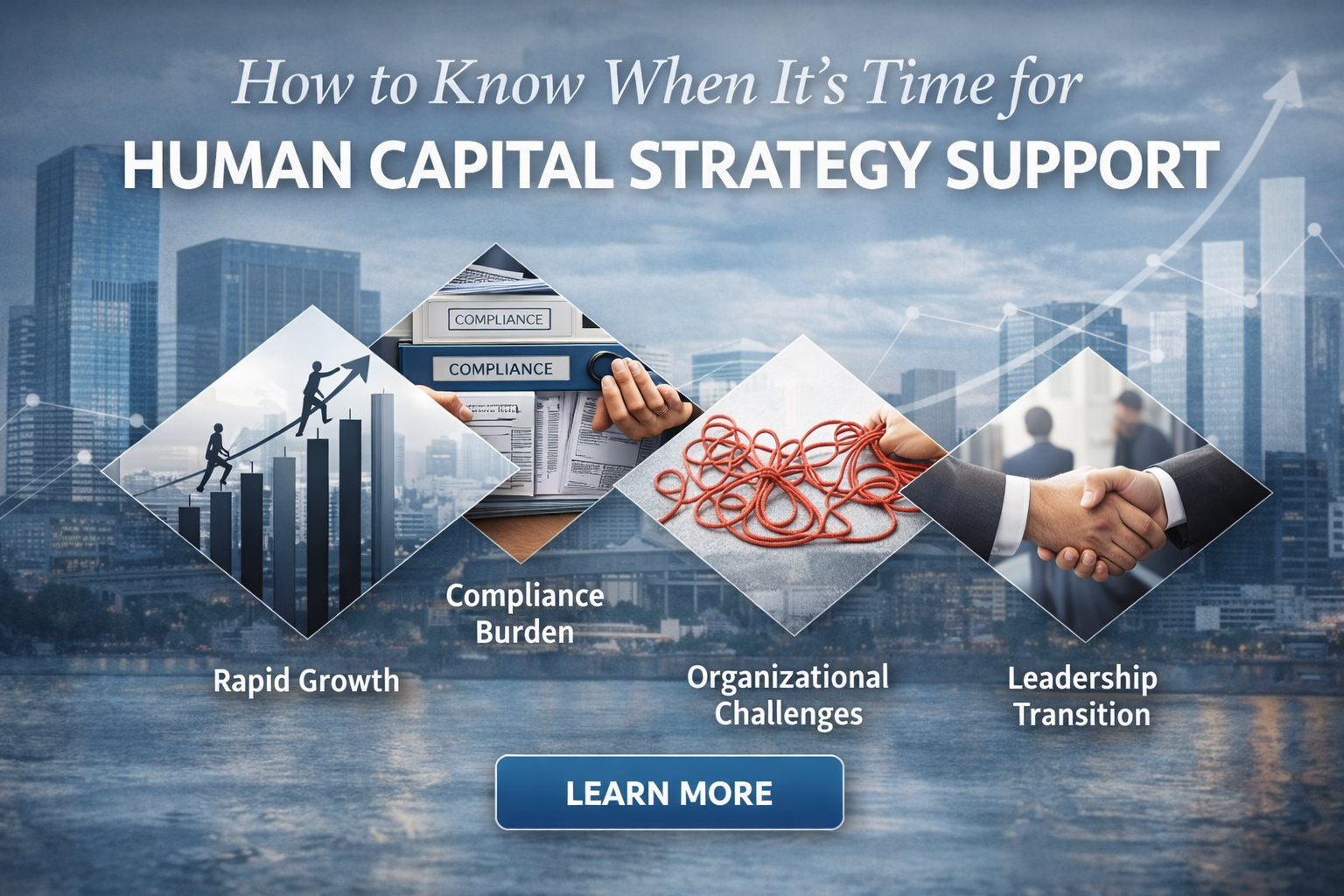
Human capital strategy support becomes necessary when people decisions begin to create operational, legal, financial, or leadership risk that informal systems can no longer absorb. While many organizations rely on internal HR or ad-hoc processes during early growth, complexity eventually reaches a point where workforce issues impact governance, compliance, and enterprise stability.
This resource outlines the most common indicators that an organization has reached that threshold—and why early intervention matters.
What Is Human Capital Strategy Support?
Human capital strategy support focuses on aligning leadership decisions, workforce structure, compliance, and people operations with organizational risk and long-term performance. Unlike traditional HR services, it treats people systems as enterprise infrastructure, not administrative functions.
Organizations typically seek human capital strategy support when workforce complexity begins to outpace existing systems, creating exposure that leadership can no longer manage reactively.
Key Signs It’s Time for Human Capital Strategy Support
1. Rapid Growth Is Outpacing Structure
Growth often exposes weaknesses in role clarity, reporting lines, decision authority, and accountability. When hiring accelerates without corresponding systems, organizations experience confusion, inconsistent leadership practices, and uneven performance.
Common indicators include:
Leadership teams stretched thin by people issues
Inconsistent role definitions or decision authority
Difficulty maintaining culture or standards during expansion
Human capital strategy support helps design scalable people systems that can grow without destabilizing operations.
2. Compliance Burden Is Increasing
As organizations grow or enter regulated environments, workforce compliance becomes more complex. Misclassification, documentation gaps, wage and hour exposure, and inconsistent policy enforcement often emerge quietly—until an audit, complaint, or investigation occurs.
Warning signs include:
Uncertainty around worker classification or labor standards
Reactive compliance fixes instead of structured controls
Dependence on outdated or informal policies
Strategic support ensures compliance is built into operations rather than addressed after risk materializes.
3. Organizational Challenges Are Becoming Chronic
When the same people issues resurface—conflict, turnover, disengagement, or leadership breakdowns—it often signals structural problems rather than individual performance failures.
Patterns to watch for:
Ongoing employee disputes or escalations
Leadership teams managing conflict instead of strategy
Declining morale or trust
Human capital strategy support addresses root causes by redesigning systems, expectations, and governance rather than applying short-term fixes.
4. Leadership Transition or Restructuring Is Underway
Leadership changes, mergers, restructures, or ownership transitions introduce risk if people systems are not aligned to the new operating reality. Without clarity, organizations experience confusion, resistance, and loss of institutional knowledge.
Support becomes critical when:
New leaders inherit unclear structures or authority
Organizational redesign creates uncertainty
Legacy practices conflict with new leadership expectations
Strategic human capital planning stabilizes organizations during transition and preserves continuity.
Why Timing Matters
Organizations often wait until workforce issues escalate into legal disputes, regulatory action, or reputational damage. At that point, options are narrower and more costly. Early human capital strategy support allows leaders to address risk proactively—before it becomes disruptive.
The most effective interventions occur when organizations recognize that people systems require the same level of intentional design as finance, operations, or governance.
When Organizations Benefit Most from Human Capital Strategy Support
Human capital strategy support is especially valuable when organizations:
Are you scaling quickly or entering new markets
Operate in regulated or high-scrutiny environments
Face leadership turnover or structural change
Experience recurring workforce conflict or compliance exposure
In these moments, clarity, structure, and risk alignment matter more than speed.
Key Takeaway
Human capital challenges rarely appear suddenly. They build gradually as organizations grow, change, or operate under increasing complexity. Recognizing the early signs—and responding with strategic support—protects performance, leadership credibility, and long-term organizational stability.