

SPRING
Employee Separation Compliance Checklist
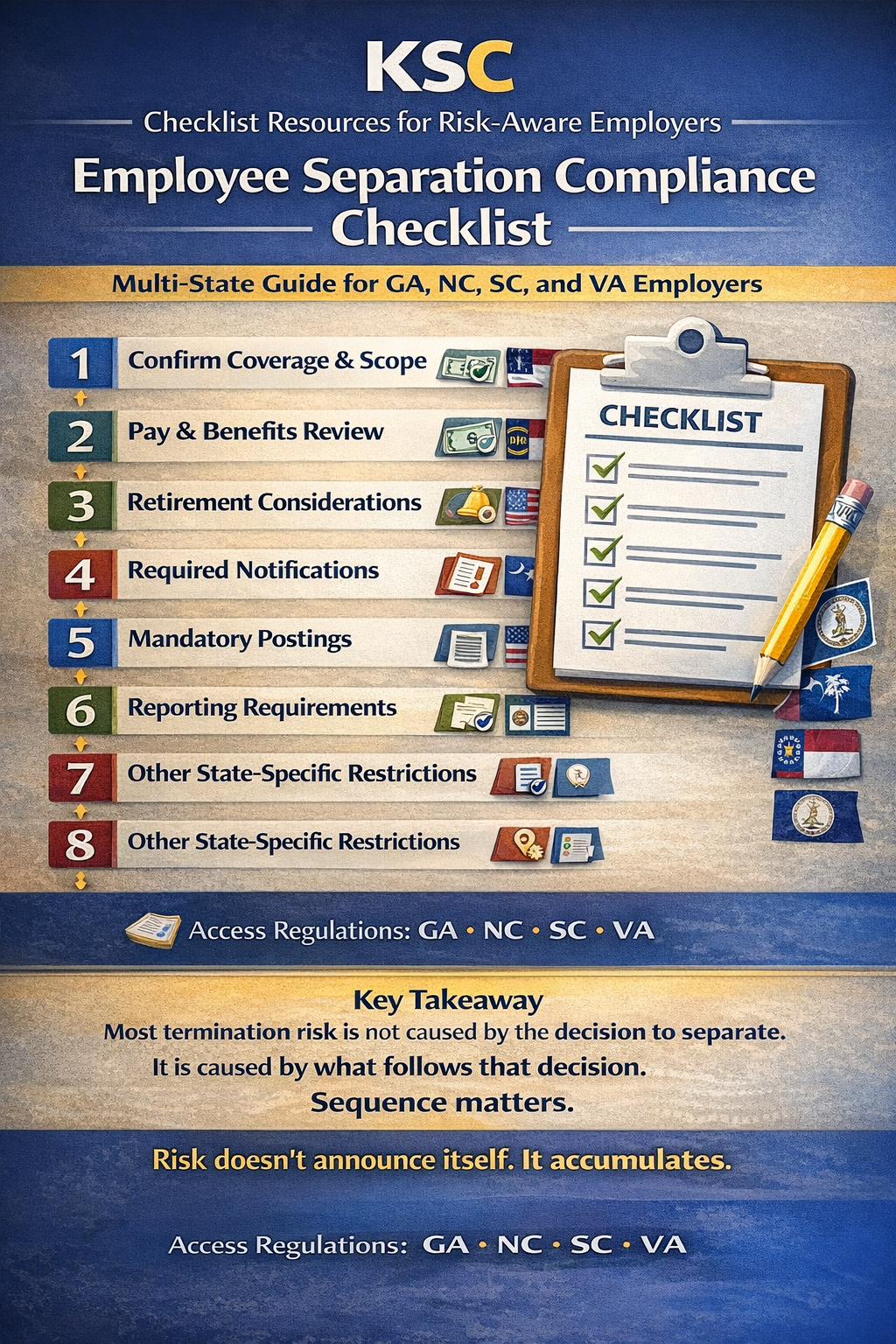
Employee separations—whether voluntary or involuntary—create concentrated legal, financial, and reputational risk. Most compliance failures during separations are not intentional; they occur because processes are inconsistent, undocumented, or handled under time pressure.
This checklist provides a practical framework to help organizations manage employee separations compliantly, reduce legal exposure, and ensure proper documentation, final pay, and benefits handling.
What Is Employee Separation Compliance?
Employee separation compliance refers to the legal, procedural, and documentation requirements that apply when an employee exits an organization. This includes final pay, benefits continuation, records retention, access termination, and consistent application of policy and law.
Separation compliance is especially critical because decisions made at exit are often scrutinized later—during audits, unemployment claims, disputes, or litigation.
Employee Separation Compliance Checklist
Use this checklist for resignations, terminations, layoffs, and role eliminations.
1. Separation Type & Decision Documentation
☐ Separation type is clearly identified (voluntary, involuntary, reduction in force)
☐ Business rationale is documented and consistent with policy
☐ Decision aligns with past practice and comparable cases
☐ Leadership approval is documented where required
Why this matters:
Inconsistent or undocumented decisions are a primary driver of wrongful termination and discrimination claims.
2. Final Pay & Wage Compliance
☐ Final paycheck timing complies with state and federal requirements
☐ All earned wages, overtime, and commissions are included
☐ Accrued and unused PTO is handled according to policy and state law
☐ Deductions are lawful and documented
Why this matters:
Final pay violations are one of the most common—and avoidable—sources of penalties and claims.
3. Benefits, COBRA, and Continuation Notices
☐ Benefits end date is confirmed and communicated
☐ COBRA or continuation notices are issued timely where applicable
☐ Retirement plan information is provided
☐ Benefits documentation is retained
Why this matters:
Benefits errors often surface months later and can trigger regulatory or fiduciary exposure.
4. Documentation & Records Retention
☐ Termination letter or resignation confirmation is completed
☐ Personnel file reflects accurate separation reason
☐ Performance, disciplinary, and investigation records are complete
☐ Records are retained according to legal requirements
Why this matters:
Incomplete or inconsistent records weaken the organization’s position if the separation is challenged.
5. Access, Property & Confidentiality Controls
☐ System and facility access is terminated appropriately
☐ Company property is returned or accounted for
☐ Confidentiality and IP obligations are reaffirmed
☐ Exit checklist is completed and retained
Why this matters:
Operational and data risk often increases immediately following separation.
6. Communication & Dignity in Process
☐ Separation conversation is planned and documented
☐ Messaging is factual, consistent, and non-retaliatory
☐ Employee is treated respectfully and professionally
☐ Internal communications are controlled and appropriate
Why this matters:
How a separation is handled directly affects morale, reputation, and downstream claims.
7. Post-Separation Risk Review
☐ Unemployment response is timely and accurate
☐ Separation is reviewed for patterns or systemic risk
☐ Lessons learned are documented
☐ Policies or practices are updated if needed
Why this matters:
Separation risk does not end on the employee’s last day.
How to Use This Checklist
Before separation: Confirm readiness and compliance
During separation: Ensure consistency and documentation
After separation: Reduce downstream legal and operational risk
This checklist should be used in conjunction with organizational policies, state law requirements, and documented decision authority.
Common Red Flags That Signal Increased Risk
Rushed or emotionally driven decisions
Inconsistent treatment across employees
Missing or contradictory documentation
Unclear final pay calculations
Lack of centralized ownership of the process
When these appear, separation risk escalates quickly.
When Organizations Benefit from Separation Compliance Support
Organizations most often need additional separation compliance support when:
Operating across multiple states
Managing reductions in force
Handling performance or conduct terminations
Navigating regulated or high-scrutiny environments
Experiencing recurring claims or disputes
At this stage, consistency and structure matter more than speed.
Key Takeaway
Employee separations are not administrative events—they are risk events.
Organizations that manage separations with structure, documentation, and compliance protect leadership credibility, reduce legal exposure, and preserve organizational stability long after the exit occurs.