Influence Without Control: The Mediation Skill That Resolves Conflict Faster
Most disputes don’t fail because the facts are unclear.
They fail because people feel unheard, unsafe, or defensive.
In mediation, control is rarely the solution. Influence is.
One of the most misunderstood aspects of effective mediation is the belief that resolution comes from telling parties what should happen. In reality, lasting resolution occurs when individuals feel empowered to choose outcomes they can live with—without coercion, posturing, or pressure.
This distinction is foundational to effective alternative dispute resolution.
Why Control Escalates Conflict—and Influence Resolves It
You cannot control people into agreement.
You can influence them into clarity.
Experienced mediators understand a core truth: when people are told what to do, they resist. When they are guided to articulate their own needs, priorities, and concerns, defensiveness lowers and problem-solving begins.
This is why professional mediation focuses less on positional bargaining and more on reality framing—how issues are presented, questions are asked, and conversations are structured. The goal is not to overpower the room, but to help each party regain agency over their own decision-making.
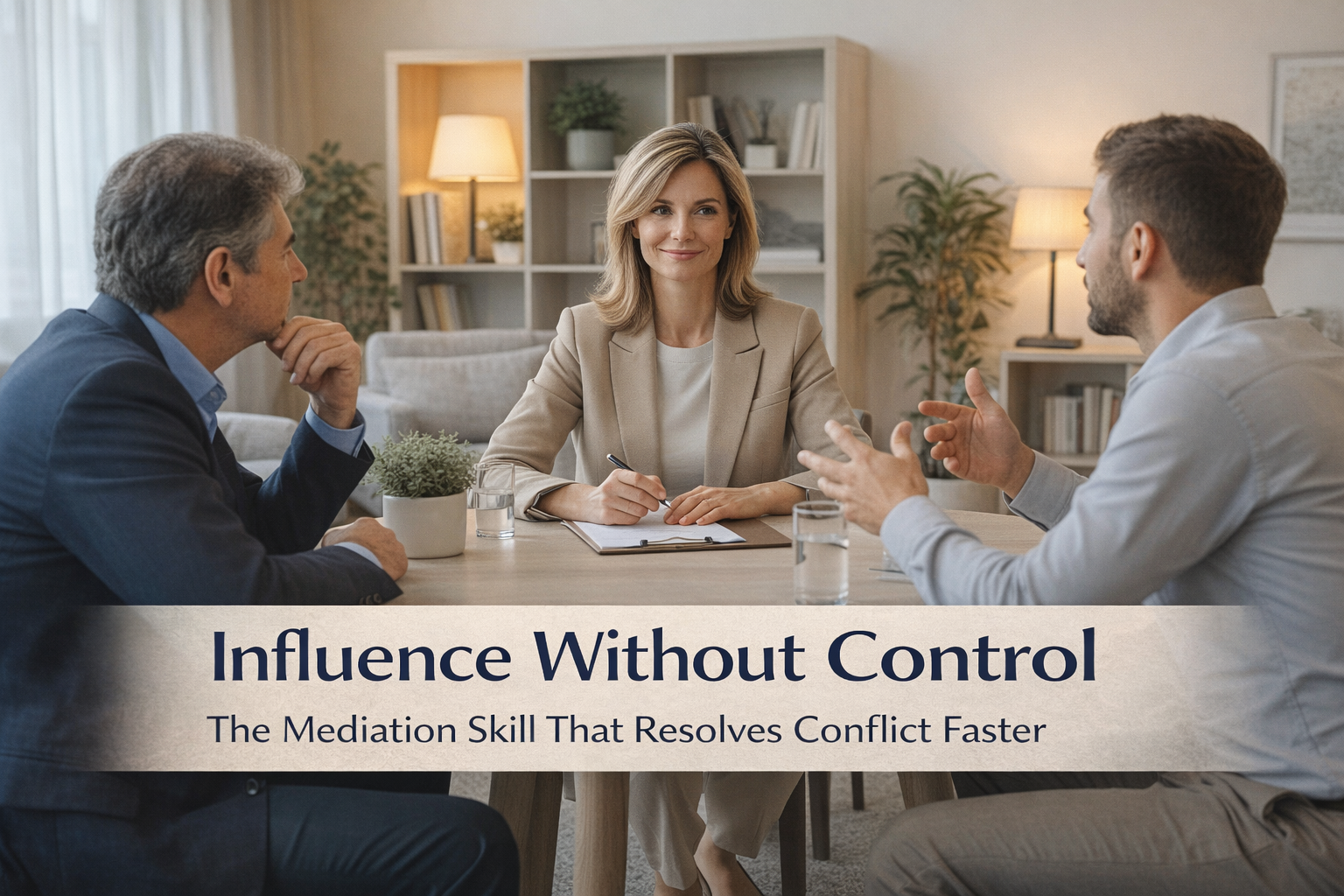
Business mediation session focused on resolution, confidentiality, and facilitated negotiation.
The Three Drivers Behind Every Dispute
Regardless of whether the conflict involves a business partnership, employment matter, family issue, or government-related dispute, three underlying needs are almost always present:
Security – People need to feel stable, respected, and protected from loss.
Material impact – Financial, operational, or reputational outcomes matter.
Recognition – Being heard, acknowledged, and taken seriously is non-negotiable.
When mediation addresses these drivers directly, resolution accelerates. When they are ignored, conflict calcifies.
Listening Is Not Passive—It’s Strategic
One of the most powerful tools in mediation is disciplined listening.
Not reactive listening.
Not interruptive listening.
Intentional, uninterrupted, structured listening.
When parties are given space to fully explain their position—without correction or contradiction—tension drops. Asking purposeful questions (“what,” “how,” and especially “why”) encourages reflection rather than escalation. In many cases, arguments dissolve simply because someone finally feels understood.
This is not accidental. It is a trained skill.
Creating Momentum Without Pressure
Effective mediation is not about forcing agreement. It’s about creating momentum:
Establishing areas of mutual agreement early
Framing requests in terms of shared benefit
Encouraging realistic expectations
Guiding parties toward commitments they can honor
When people believe the process is fair, transparent, and respectful, compromise becomes possible—even in high-stakes disputes.
Why Experience Matters in Mediation
Not all mediation is equal.
True mediation expertise lies in understanding human behavior under pressure—how insecurity shows up as defensiveness, how power dynamics distort communication, and how poorly framed conversations can derail resolution entirely.
At KSC, mediation is approached as a structured, strategic process designed to restore clarity, preserve relationships where possible, and resolve disputes efficiently—without unnecessary escalation or litigation exposure.
Because resolution isn’t about winning.
It’s about moving forward with certainty.