Philadelphia Ban the Box Updates Effective January 2026
Employment compliance rarely changes quietly. And Philadelphia’s Fair Criminal Record Screening Standards Ordinance—commonly known as “Ban the Box”—is no exception.
Signed into law on October 8, 2025, the latest amendments take effect on January 6, 2026 and significantly change how employers may consider criminal history in hiring decisions. These updates expand worker protections, narrow what information can be reviewed, and increase employer obligations during the hiring process.
If you hire in Philadelphia—or engage independent contractors, gig workers, or rideshare drivers—this is not a change to put off.
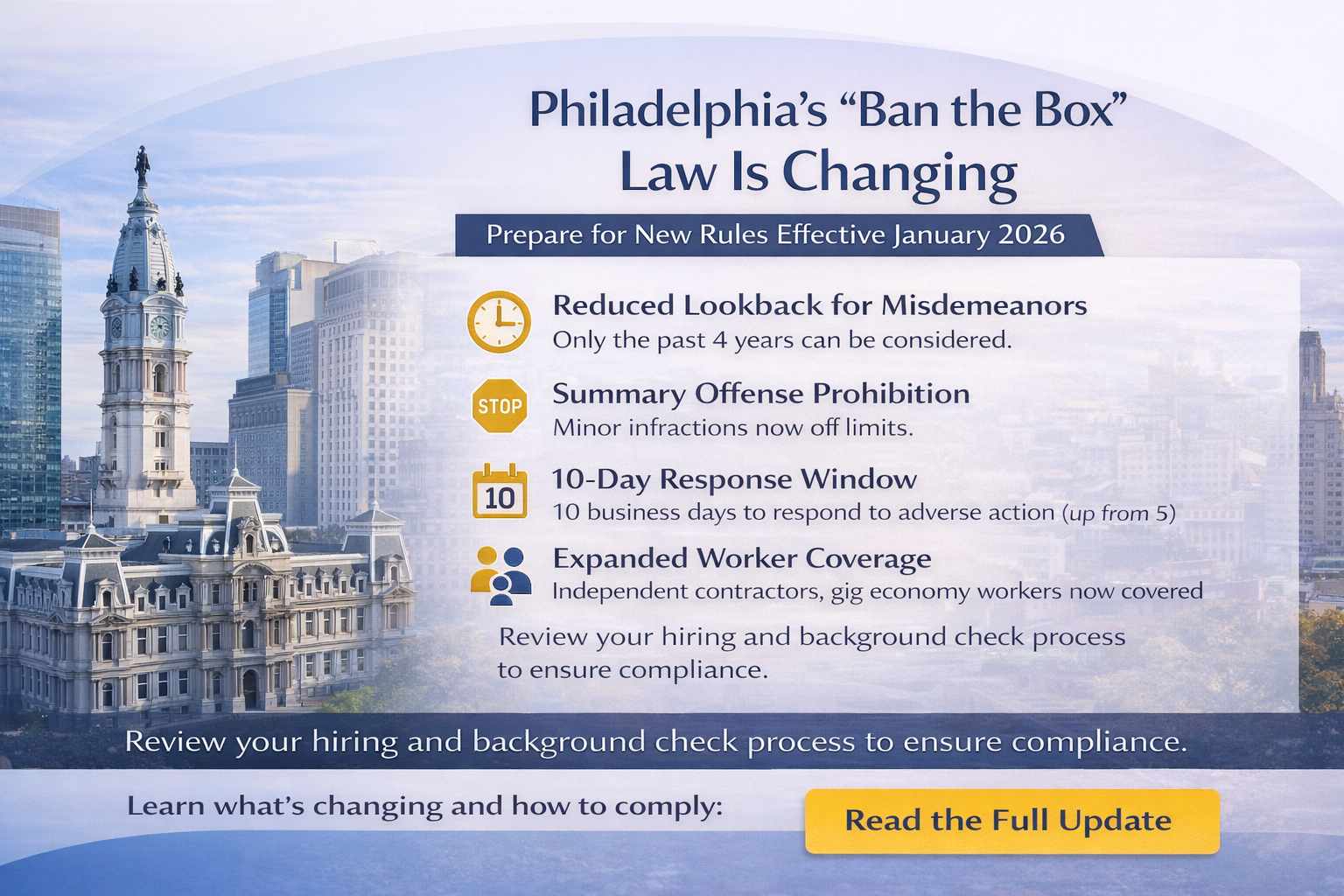
Visual summary of 2026 Philadelphia Fair Criminal Record Screening Standards Ordinance changes
Key Changes Taking Effect January 6, 2026
Here’s what employers need to understand now:
1. Shortened Lookback for Misdemeanors
Employers may only consider misdemeanor convictions from the past four (4) years. Older misdemeanor convictions are off-limits in employment decisions.
2. Summary Offenses Are Prohibited
Minor infractions classified as summary offenses may no longer be considered at all.
3. Expanded Candidate Response Period
If you intend to take adverse action based on criminal history, you must now give the candidate 10 business days—up from five—to respond with evidence of error, rehabilitation, or mitigating circumstances.
4. Expanded Worker Coverage
The ordinance now explicitly applies to:
Independent contractors
Rideshare drivers
Gig economy workers
This expansion matters for organizations that previously assumed these roles fell outside traditional employment screening rules.
Why This Update Matters
At its core, Ban the Box laws are designed to reduce barriers to employment while promoting fair hiring practices. The 2026 amendments go further by tightening lookback periods, limiting what records may be considered, and giving candidates more time to respond before adverse action is taken.
From a human capital perspective, this is not just about compliance—it’s about process discipline, documentation, and consistency in how hiring decisions are made.
What Employers Should Be Doing Now
January 6 will arrive quickly, and enforcement does not wait for internal alignment. Practical preparation matters.
At a minimum, organizations should be:
Auditing job postings and background check language
Updating adverse action notice templates to reflect the new 10-day response window
Reviewing screening vendor practices and default lookback settings
Training hiring managers on what can—and cannot—be considered
This is also the right moment to assess whether your hiring process relies too heavily on habit rather than structure. In regulated environments, good intentions are not a substitute for defensible processes.
A Human Capital Lens on Compliance
Laws like this don’t just change what employers are allowed to do—they expose where processes are fragile, undocumented, or inconsistent. Organizations that treat compliance as a one-time update often find themselves back in reactive mode when the next change arrives.
Those that treat compliance as part of a broader human capital system—aligned across hiring, operations, and risk—tend to move more confidently and with less disruption.
Learn More
Philadelphia City Council’s full legislative text is available here for reference:
Philadelphia Fair Criminal Record Screening Standards Ordinance – Amendments
For organizations looking to move beyond awareness into execution, we’ve outlined a 7-step action plan in our Client Resource Center to help teams operationalize these changes without slowing hiring or increasing risk.
Disclaimer: We are not attorneys, and this content is not legal advice. Organizations should consult qualified legal counsel regarding compliance with local, state, and federal employment laws.